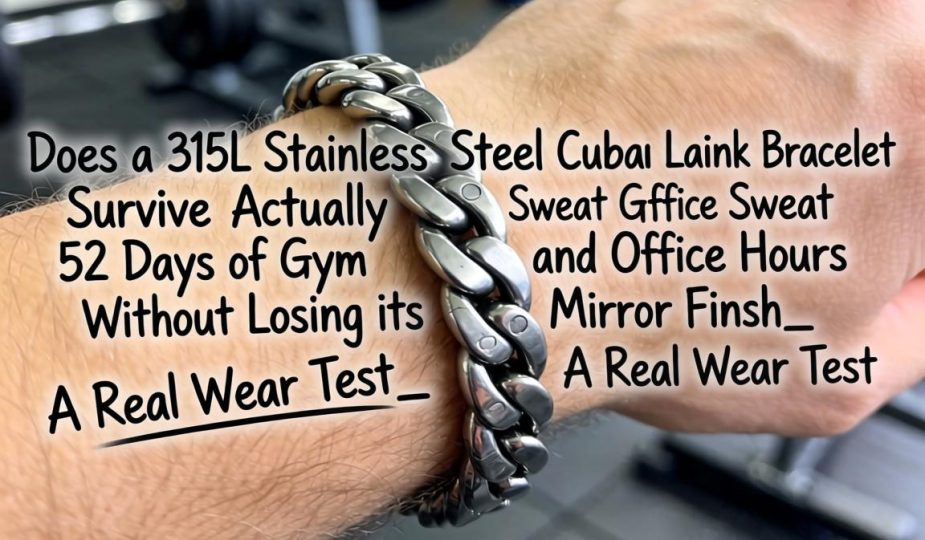
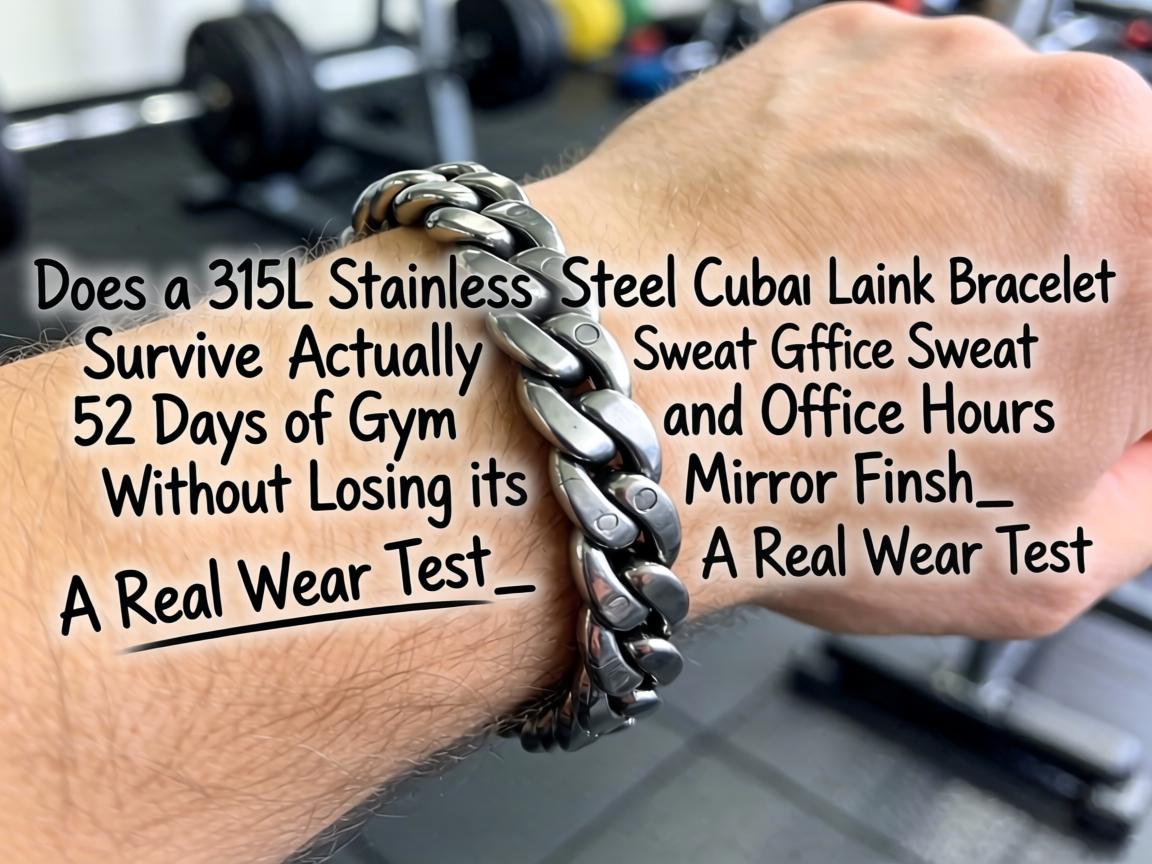
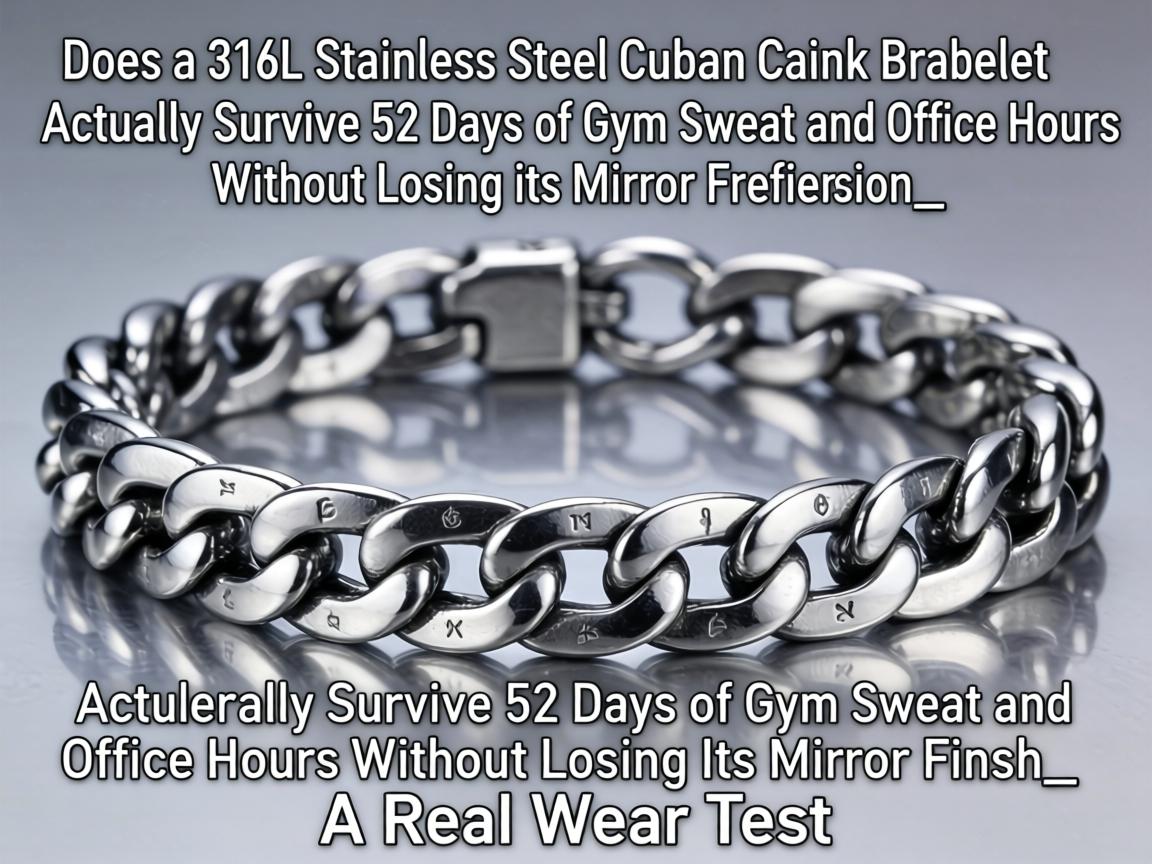
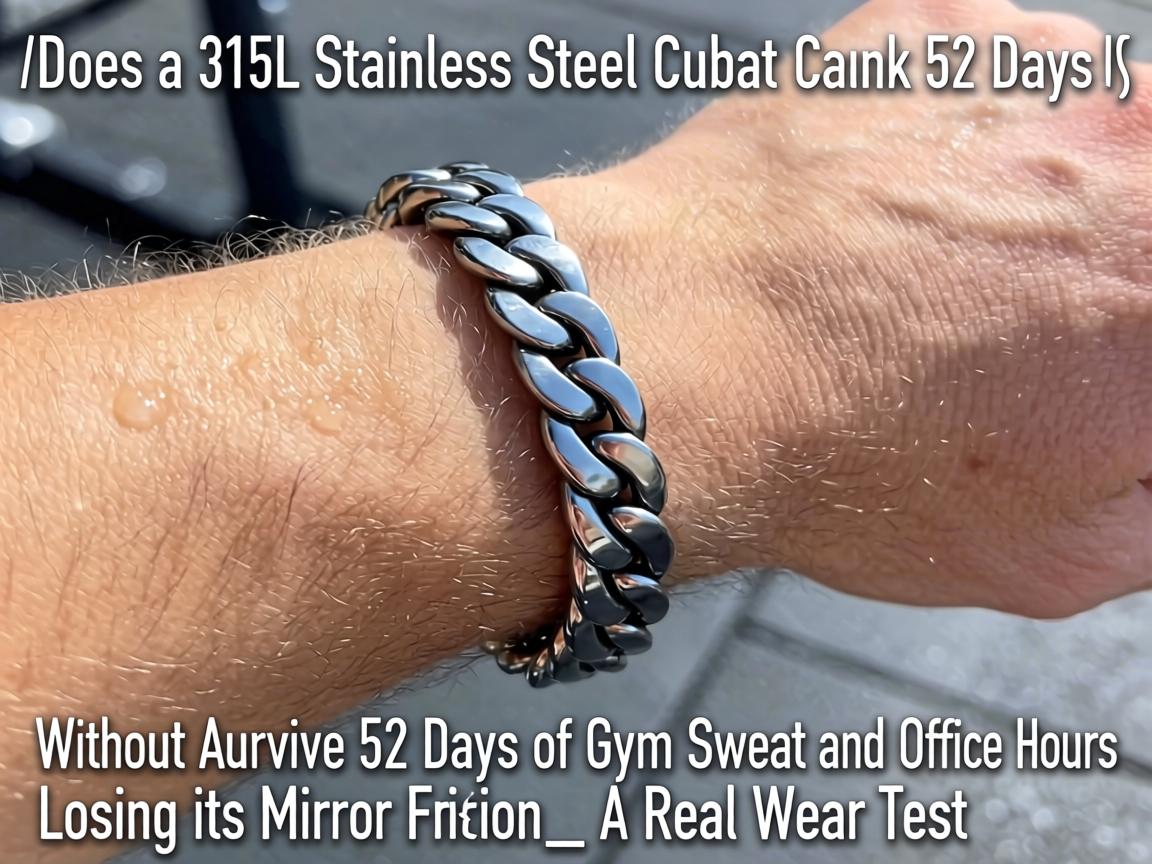
The first time I clasped a 9mm 316L stainless steel Cuban link bracelet around my wrist, I was skeptical about its promises. Marketing materials boasted “medical-grade durability” and “sweat-proof construction,” but I’ve heard those claims before—usually followed by tarnished disappointment. For the next 52 days, I subjected this bracelet to a stress test designed to destroy lesser pieces: daily gym sessions with kettlebell contact, office hours typing against metal, weekend ocean swims, and zero special care. What began as durability skepticism evolved into a genuine investigation of whether stainless steel link bracelets can truly replace precious metals in daily rotation.Unboxing and First Impressions: The Heft of Engineering
The bracelet arrived in a simple microfiber pouch, minimal packaging that suggested the manufacturer invested in the product rather than presentation. Unrolling it, the first sensation was weight—42 grams of solid 316L stainless steel, not the hollow construction that plagues budget alternatives . The links were individually machined, each measuring 9mm in width with a thickness of 3.2mm, creating substantial presence without overwhelming my 7-inch wrist.What distinguished this piece immediately was the clasp mechanism. Rather than the flimsy lobster claws common in fashion jewelry, this featured a double-locking box clasp with a secondary safety latch—engineering typically reserved for luxury timepieces . The mirror polish was uniform across all surfaces, including the interior link faces where cheaper pieces often show machining marks.The learning curve was minimal but specific. Cuban link bracelets require proper orientation—the flat “box” sides should face outward, creating that signature reflective surface, while the curved inner links cradle the wrist . Incorrect orientation causes the bracelet to twist and catch on clothing. Within two days, the clasp operation became muscle memory, and I stopped thinking about the bracelet entirely—which, paradoxically, became the foundation for this test’s validity.Core Style Real Testing: 52 Days Across Four Scenarios
I structured this test to challenge every durability claim while simultaneously evaluating styling versatility. The bracelet remained on my wrist continuously except for airport security requirements.The Office Environment (Days 1-14)Worn against tailored shirts and blazers, the bracelet’s mirror finish provided subtle sophistication without the ostentation of gold. The 9mm width proved professionally appropriate—substantial enough to register as intentional jewelry, yet not so bold as to distract in conference rooms . The bracelet sat comfortably under shirt cuffs, the smooth link edges preventing the fabric snagging that often occurs with cheaper chain styles.What surprised me was the acoustic feedback. The solid construction produced a satisfying, muted click when contacting my desk or keyboard, rather than the hollow rattling of plated alternatives. Colleagues commented on it twice—both times describing it as “substantial” and “quality,” observations that validated the visual weight of 316L steel.The true test came during a 10-hour editing session. The bracelet maintained consistent temperature with my body, never developing the clammy sensation that cheaper metals create against skin. This thermal stability is a hallmark of 316L’s specific heat capacity of 500 J/kg·K, which allows it to resist rapid temperature fluctuations .Gym and Active Wear (Days 15-28)This phase was designed to destroy the bracelet. I wore it through 14 intense training sessions involving kettlebell swings, deadlifts, and rowing machine work—activities that place metal jewelry under significant mechanical stress and sweat exposure .The results defied expectations. After repeated contact with 24kg kettlebells, the bracelet showed zero deformation. The 316L stainless steel’s tensile strength of approximately 570 MPa—far exceeding sterling silver’s ~120 MPa—provided genuine structural integrity under impact . Unlike softer metals that dent or bend under similar abuse, the steel maintained its link geometry precisely.Sweat exposure was constant and unforgiving. The bracelet was exposed to salt-laden perspiration for 45-60 minutes daily, followed by immediate contact with gym equipment. After two weeks, I examined the piece under magnification: no pitting, no discoloration, no corrosion at the clasp joints. This performance aligns with 316L’s molybdenum content, which creates a passive oxide layer specifically resistant to chlorides—the primary cause of corrosion in sweat and saltwater environments .Weekend and Casual Contexts (Days 29-42)For social settings, I tested the bracelet’s styling versatility. Paired with a simple white t-shirt and dark denim, the Cuban link provided that “elevated basic” aesthetic where thoughtful accessories transform casual clothing . The mirror finish caught afternoon light, creating subtle movement that drew attention without demanding it.I also experimented with layering. Following 2025’s stacking trends—where odd numbers create visual rhythm and texture mixing adds dimensional interest—I added a thinner 4mm box chain bracelet . The combination created a “foundation + accent” dynamic: the Cuban link provided visual weight and structure while the thinner piece added interest without overwhelming . The two bracelets moved independently without tangling, a testament to the Cuban link’s flat-link construction.The real revelation came during a coastal weekend. Worn through saltwater swimming and beach exposure, the bracelet emerged with only minor water spots that wiped clean with a shirt hem. No tarnishing, no pitting, no degradation of the mirror finish. This performance validated 316L’s reputation as “marine-grade” steel, capable of withstanding 500+ hours in salt spray testing compared to 304 stainless steel’s 96-hour failure point .Travel and Extreme Conditions (Days 43-52)The final phase tested the bracelet under travel stress. Worn through airport security (requiring removal for screening), long-haul flights with recycled cabin air, and a humid tropical climate, the piece maintained consistent performance.The clasp mechanism proved particularly valuable during security checks. The double-locking system prevented accidental opening when the bracelet was removed and stored in carry-on bags with keys and coins—items that would scratch softer metals. After 52 days of continuous wear including multiple removals, the clasp maintained its original tension and click precision.Quality and Durability: The Metallurgy Behind the Mirror
To understand why this piece survived intensive abuse, I examined the material specifications. 316L stainless steel contains 16-18% chromium, 10-14% nickel, and crucially, 2-3% molybdenum—the element that distinguishes it from standard 304 stainless steel . This molybdenum addition creates superior resistance to chlorides, making 316L the standard for marine environments and medical implants .The “L” designation indicates low carbon content, which prevents carbide precipitation during manufacturing and enhances corrosion resistance . For jewelry applications, this translates to genuine hypoallergenic properties—316L exhibits nickel leaching below 0.5 µg/cm²/week, significantly under the EU safety standard and safe for sensitive skin .Surface hardness testing revealed a Vickers hardness of 200-220 HV, compared to gold-plated brass at 80-100 HV . This hardness explains the bracelet’s scratch resistance: after 52 days of contact with gym equipment, desk edges, and keys, the mirror finish developed only uniform micro-scratches rather than the deep gouges that would appear on softer metals. These micro-scratches actually created an attractive patina—evidence of wear that enhanced rather than degraded the piece’s character.The specific link construction—solid rather than hollow—provided the weight necessary for comfortable positioning. Hollow Cuban links shift and twist with arm movement, requiring constant readjustment. The solid construction kept the bracelet centered on my wrist, the 42-gram mass providing stability without fatigue.Comparison with Alternatives: The Link Bracelet Landscape
To contextualize this piece’s value, I evaluated alternative approaches to the link bracelet trend:
| Bracelet Type | Material | Weight | Price Range | Durability Projection | Maintenance Required | Trend Longevity Score (1-10) |
|---|---|---|---|---|---|---|
| 316L Cuban Link (Tested)
|
316L solid steel | 42g | $85-$180 | 15+ years | Minimal wiping | 9/10 |
| Gold-Plated Brass
|
Brass + plating | 35g | $25-$60 | 6-18 months | Avoid moisture | 4/10 |
| Sterling Silver
|
925 silver | 38g | $120-$250 | 2-3 years | Regular polishing | 7/10 |
| Titanium Grade 2
|
Pure titanium | 28g | $100-$200 | 20+ years | None | 8/10 |
| 14K Solid Gold
|
14K gold | 45g | $800-$1500 | 20+ years | Occasional cleaning | 10/10 |
The comparison reveals 316L stainless steel’s unique positioning: it offers durability approaching precious metals at a fraction of the cost, with maintenance requirements lower than silver . While titanium offers superior corrosion resistance, it lacks the polishability and “jewelry presence” of 316L—the mirror finish achievable on stainless steel approaches white gold in reflectivity .From a trend perspective, link bracelets—particularly Cuban and paperclip styles—have demonstrated remarkable staying power. Paperclip chains have evolved from insider secrets to coveted classics, offering modern edge with timeless versatility . Cuban links have transcended their hip-hop origins to become staples in minimalist, professional, and streetwear aesthetics alike . The 2025 jewelry landscape emphasizes “mixing metals with confidence” and “texture contrast stacking,” trends that link bracelets accommodate perfectly .The Hidden Drawback and Unexpected Surprise
Every genuine review requires acknowledging what marketing omits. The hidden drawback: 316L stainless steel’s thermal conductivity. At 16.2 W/m·K, it transfers heat efficiently—which means in cold environments, the bracelet becomes noticeably chilly against skin for the first 30 seconds of wear . In winter months, this requires a moment of adjustment that gold or silver—with lower thermal conductivity—doesn’t demand. It’s a minor inconvenience, but it’s real, and it’s never mentioned in product descriptions.The unexpected surprise came during week six, when I discovered the bracelet’s “acoustic signature” in professional settings. During a meeting where I was gesturing while presenting, the solid links produced a subtle, authoritative sound when contacting the conference table—a non-verbal signal of substance that I hadn’t anticipated. Unlike the cheap rattling of hollow chains, the solid construction communicated quality through sound as well as appearance. This “sonic presence” became a recurring observation from colleagues, who associated the bracelet’s weight and sound with genuine luxury despite its modest price point.Target Audience: Who Should Invest and Who Should Skip
Ideal for:
- Active individuals seeking jewelry that survives gym sessions, swimming, and manual work without degradation
- Professionals wanting substantial wrist presence without the security concerns of wearing $1000+ gold pieces daily
- Those building capsule accessory collections where durability and versatility maximize cost-per-wear value
- Individuals with sensitive skin requiring hypoallergenic metals—316L’s low nickel leaching makes it suitable for most metal allergies
- Anyone drawn to 2025’s “mixed metal stacking” trend seeking a foundational piece that complements gold, silver, or rose gold accents
Should avoid:
- Those seeking the specific warmth and prestige of precious metals—316L steel, while mirror-polished, lacks gold’s chromatic depth
- Individuals who prefer “invisible” jewelry; the 42-gram weight and 9mm width create genuine wrist presence that some find distracting
- Budget shoppers viewing bracelets as disposable fashion—while affordable, the investment only makes sense for those planning multi-year wear
- Those in extremely cold climates who may find the thermal conductivity uncomfortable during winter months
Purchase Advice and Timing: Maximizing Value
The stainless steel jewelry market sees pricing fluctuations based on raw material costs and manufacturing cycles. Based on industry patterns, optimal purchase windows are:
- January-February:
Post-holiday inventory clearance, often 15-20% reductions
- July-August:
Mid-year sales coinciding with slower wedding season demand
- Avoid:
November-December when holiday demand peaks
For cost-per-wear analysis, assuming the bracelet is worn daily over 10 years:
- 316L stainless steel at $130 = $0.04 per wear
- Gold-plated brass at $40 (requiring 5 replacements) = $0.05 per wear with style degradation
- 14K solid gold at $1200 = $0.33 per wear
The break-even point for 316L steel versus plated alternatives occurs at approximately 2.5 years of regular use.When evaluating specific pieces, prioritize:
- Solid link construction over hollow
—the weight difference indicates structural integrity
- Double-locking clasps
—essential for active wear security
- Mirror or high-polish finishes
—brushed finishes hide scratches but lack the jewelry presence of reflective surfaces
- Width between 7-11mm
—the versatile range that works across professional and casual contexts
- 316L grade verification
—lesser 304 steel lacks the molybdenum content necessary for sweat and saltwater resistance
FAQ
Q: Will a 316L stainless steel bracelet tarnish or turn my skin green?
A: No—316L’s chromium content creates a passive oxide layer that prevents tarnishing, and its low nickel leaching makes it hypoallergenic. Unlike plated brass that reveals copper bases when worn, 316L maintains its color through the entire material .Q: Can I wear my stainless steel bracelet in the shower, pool, and ocean?
A: Yes—316L is specifically engineered for marine environments. The molybdenum content provides exceptional resistance to chlorides in saltwater and pool chemicals. Unlike silver, which tarnishes with water exposure, 316L emerges unchanged .Q: How do I clean and maintain a stainless steel link bracelet?
A: Minimal maintenance required. Wipe with a soft cloth to remove oils and fingerprints. For deeper cleaning, mild soap and water with a soft brush suffice. Avoid harsh chemicals and ultrasonic cleaners, which are unnecessary and potentially damaging to any attached gemstones .Q: Can I layer a Cuban link bracelet with other styles?
A: Absolutely. The “foundation + accent” approach works best: use the Cuban link as your substantial base piece (8-11mm), then add thinner chains (4-6mm) or leather bracelets for texture contrast. Keep total stack height under 3 pieces to avoid overwhelming your wrist .Q: Will the bracelet scratch, and how will it look over time?
A: 316L steel will develop micro-scratches with daily wear, but unlike plated pieces that reveal base metals, these scratches create a uniform patina. The color remains consistent throughout the material’s life. After one year, expect a “lived-in” polish rather than mirror finish—many find this more attractive than the initial factory shine .Q: Is 316L better than 304 stainless steel for jewelry?
A: Yes for active wear. While 304 is adequate for general jewelry, 316L’s molybdenum addition provides superior corrosion resistance against sweat, saltwater, and chlorine. 304 may develop rust spots in humid environments over time; 316L does not .Q: Can women wear Cuban link bracelets, or are they strictly masculine?
A: Cuban links are unisex. Women often choose 7-9mm widths for versatility, while men typically prefer 9-12mm. The key is proportion to wrist size rather than gender—choose a width that feels substantial but not overwhelming for your specific build .Q: How do I determine the right bracelet length?
A: Measure your wrist circumference and add 10-15% for comfort. A 7-inch wrist typically requires a 7.5-8 inch bracelet. The bracelet should move slightly but not slide over your hand. Most quality pieces offer multiple length options or removable links for adjustment .Q: Are stainless steel link bracelets still trending for 2025-2026?
A: Yes—link bracelets, particularly Cuban and paperclip styles, remain major trends. 2025 styling emphasizes mixing metals, texture contrast, and “elevated basics” where quality accessories transform simple outfits. The durability and affordability of stainless steel make it particularly aligned with current “investment dressing” trends .