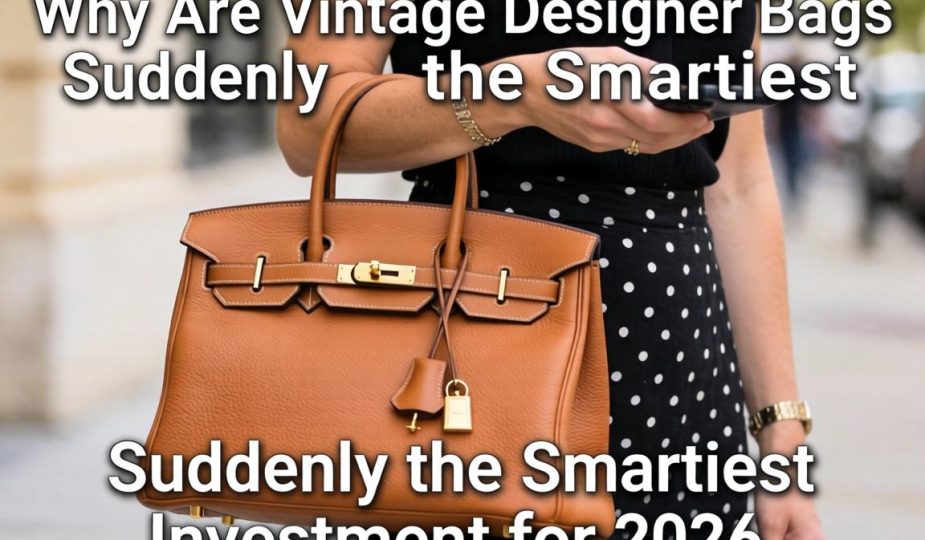
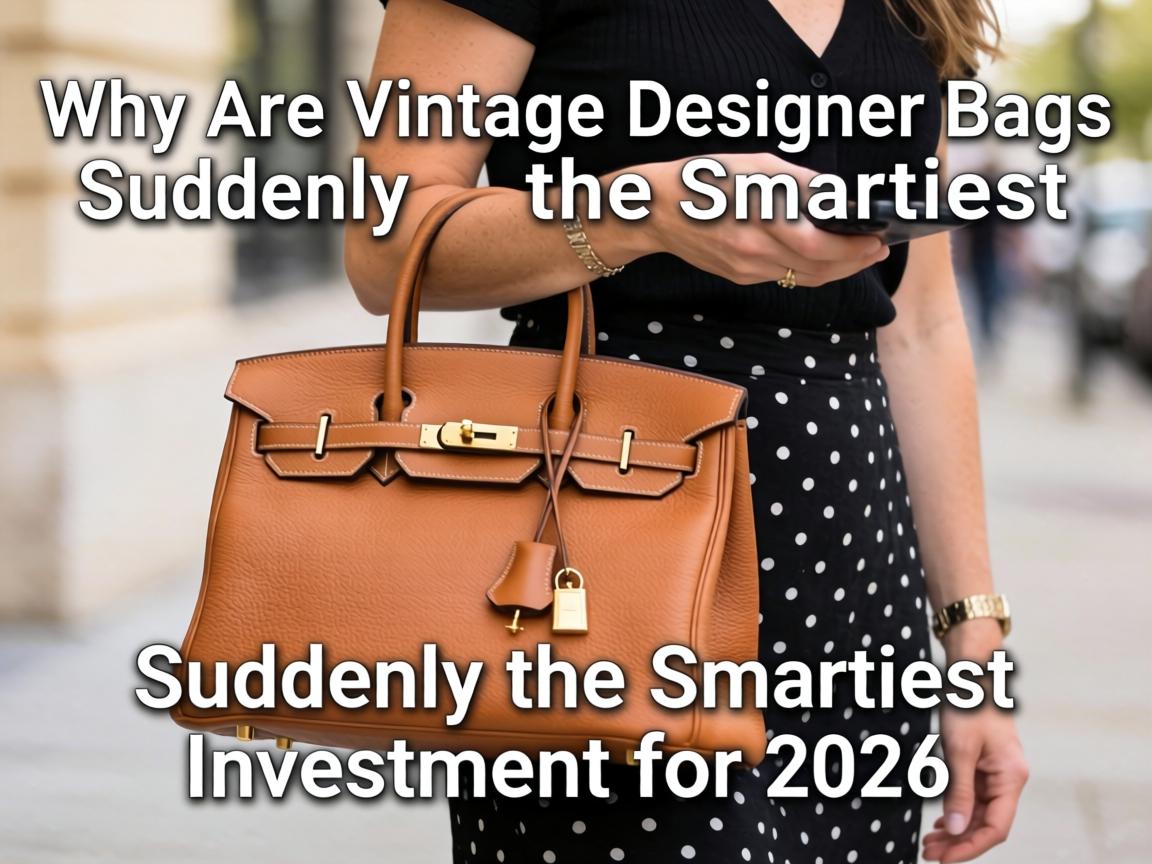
Guys, let’s be real—when did you last scroll through The RealReal without your heart rate jumping? Vintage designer bags
have officially stopped being niche collector territory and started feeling like… financial advice. With luxury resale markets
hitting $77 billion globally
and Spring 2026
collections referencing archive pieces harder than ever, that 90s Fendi Baguette
or 00s Dior Saddle
suddenly looks less like nostalgia and more like strategy. From my view, this shift says something bigger about how we value permanence over hype.You might be wondering if this is just another trend cycle
pretending to be culture. Keep reading, because here’s what I think: vintage bags actually solve problems that new luxury
keeps creating. Rising retail prices
, impossible waitlists
, and honestly? The homogenization
of current designer output. Most people don’t notice that a 1998 Chanel Classic Flap
has 22k gold-plated hardware
while today’s version uses… let’s call it less substantial materials. What does this mean for the season? It means provenance and patina
became the new status symbols.The Authentication Anxiety Everyone Faces
A lot of people ask me how to buy vintage without getting burned. The truth is messy: trust but verify
, repeatedly. From my view, reputable resale platforms
with in-house authentication—The RealReal
, Vestiaire Collective
, Fashionphile
—charge premiums for peace of mind. But here’s what I think most shoppers miss: private sellers
on Instagram
or specialized Facebook groups
often offer better prices if you develop relationships.
| Buying Channel | Price Range | Risk Level | Best For |
|---|---|---|---|
| Established resale sites
|
$$-$$$ | Low | First-time vintage buyers
|
| Auction houses
|
$$$-$$$$ | Medium | Rare collectibles
|
| Instagram sellers
|
$$ | High | Specific era hunting
|
| Estate sales
|
$ | Variable | Hidden gems, time investment
|
Most people don’t notice that Spring 2026’s bag trends
—soft structure
, neutral leathers
, minimal hardware
—directly mirror late-90s minimalism
. That Phoebe Philo-era Céline Phantom
you passed on in 2014? Now selling for triple retail
. The Prada nylon re-edition
phenomenon proved that archive resurrection
isn’t accidental; it’s calculated.Condition Categories: What Those Terms Actually Mean
You might be wondering about “good” versus “excellent” condition
. Here’s what I think: the grading system is subjective and often generous. From my view, corner wear
matters less than structural integrity
. A vintage Hermès Kelly
with slight handle darkening
but firm structure
beats a restored bag
with replaced hardware
every time. Most people don’t notice that originality
—unpolished metal
, untouched interiors
, factory stitching
—drives long-term value more than cosmetic perfection.A lot of people ask about smell
. Honestly? Vintage leather scent
—that rich, slightly sweet patina
—became part of the appeal. But mustiness
or smoke
never leaves completely. What does this mean for the season? It means condition assessment
now includes olfactory experience
as a legitimate factor in purchase decisions.The Investment Reality Check
From my view, not every vintage bag appreciates. Here’s what I think separates collectibles
from clutter
: brand archive significance
, production era
, and cultural moment
. That Gucci Jackie from the Tom Ford years
? Cultural moment
. Standard Coach from 2005
? Probably not appreciating beyond inflation.Most people don’t notice how Spring 2026 runway references
directly impact secondary markets. When Miuccia Prada
sends out re-edition 2005 nylon
, prices for original 2005 pieces
spike within 48 hours
. Keep reading if you want to understand the lag time
between runway signal and market response—usually 6-8 weeks
, which creates brief arbitrage windows
for attentive shoppers.Styling Vintage: The Integration Challenge
You might be wondering how to wear a 20-year-old bag
without looking costume-y. Here’s what I think: contrast is your friend
. That structured 90s bag
against relaxed 2026 tailoring
. The vintage gold hardware
popping against minimalist neutral outfits
. Most people don’t notice that one vintage accessory
actually grounds
contemporary pieces, preventing that overly “new”
aesthetic that reads as try-hard.A lot of people ask about maintenance
. From my view, prevention over restoration
—leather conditioning quarterly
, structured storage
, rotation between bags
—preserves value better than post-damage repair
. What does this mean for the season? It means care routines
became part of the vintage ownership experience
, almost ritualistic.Personal Observations From My Own Collection
I acquired my first vintage bag
—a slightly battered Chloe Paddington
—in 2019 for $340
. Here’s what I think I learned: emotional connection
matters more than investment return
, but when they align? Magic. That bag now sells for $800+
, but I haven’t listed it because… memory attachment
. The first vintage purchase
taught me about leather aging
, hardware tarnishing patterns
, and honestly? My own taste evolution
.Most people don’t notice how vintage collecting
reveals personal style archaeology
. My preferences—soft structure
, warm neutrals
, subtle hardware
—were already there in 2019, but I couldn’t articulate them. The bag collection
became a visual diary
of aesthetic development.A lot of people ask whether vintage bags
work for professional settings
in 2026
. From my view, context is everything
. That 80s structured briefcase-style bag
? Perfect for law or finance
. The 2000s it-bag with obvious logos
? Maybe not for conservative offices
. What does this mean for the season? It means workplace dress codes
increasingly accommodate
vintage pieces as sustainability credentials
, but discretion
still matters in certain fields.The Sustainability Angle That Actually Resonates
You might be wondering if vintage shopping
is genuinely eco-conscious
or just aesthetic posturing
. Here’s what I think: it’s both, and that’s okay. From my view, extending product lifecycles
—20 years, 30 years, 50 years
—matters more than manufacturing origin debates
. Most people don’t notice that a well-maintained vintage bag
has negative carbon impact
compared to new production
, regardless of brand sustainability claims
.What does this mean for the season beyond personal consumption? I think Spring 2026
represents maturation
in how we discuss luxury
. The conversation shifted from “who made it”
to “how long will it last”
and “who owned it before”
. Provenance
—previous owners
, decade of production
, original context
—adds narrative value
that new luxury
struggles to manufacture.Most people don’t notice how vintage bag communities
—Instagram accounts
, specialized forums
, authentication collectives
—created knowledge democratization
. Information that resided in auction houses
or dealer networks
now circulates freely. This transparency
benefits everyone except… maybe the dealers who profited from opacity
.Final Thoughts (Because I Promised No Formal Summary)
Here’s what I think about vintage as investment
: treat it like collecting art
, not trading stocks
. Buy what you love enough to keep
, what you’d use if value dropped 50%
, what tells a story
you want to carry. Most people don’t notice that the best vintage purchases
often happen when you’re not hunting
—estate sale discoveries
, family attic finds
, unexpected shop encounters
.A lot of people ask if I regret any purchases. From my view, one
: a “rare” colorway
that clashed with everything I own
. Here’s what I learned: versatility
matters more than scarcity
for actual use
. That bag sits in climate-controlled storage
as expensive education
.What does this mean for the season? It means Spring 2026
invites us to be curators
rather than consumers
. To view fashion history
as available
, touchable
, wearable
. The vintage designer bag
on your shoulder carries decades
—of craftsmanship
, of previous lives
, of style evolution
. That’s something new production
, however excellent, simply cannot replicate.Keep reading between the auction estimates
and condition reports
. The real value
often hides in imperfections
, in signs of use
, in the knowledge that beautiful things can survive
—and thrive
—across generations
.