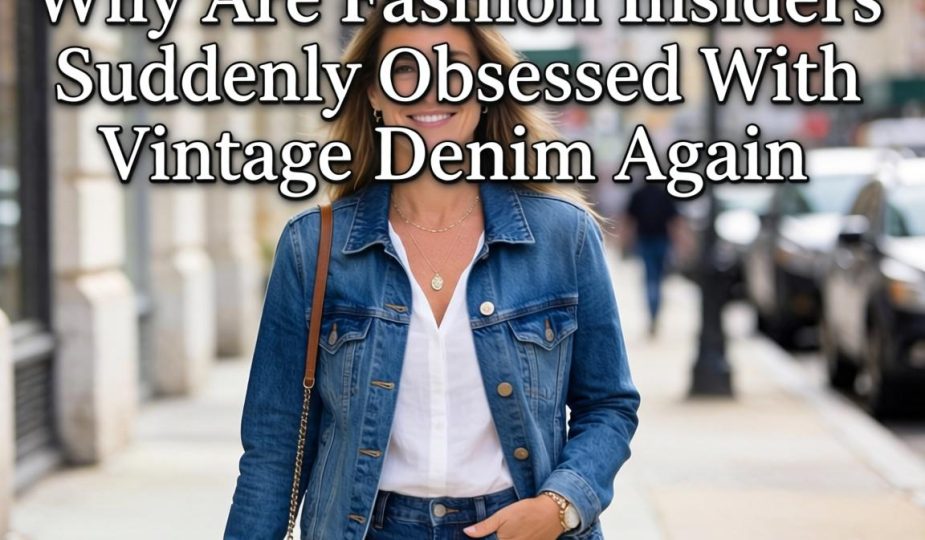




So here’s the thing, guys—have you noticed how everyone’s suddenly hunting for the perfect pair of vintage jeans again? Not the distressed kind from 2010, but real, actual vintage denim that feels like it has stories woven into every thread. This whole resurgence is hitting different right now, and honestly? I’m completely here for it. Between sustainable fashion movements and the endless scroll through retro-inspired outfits
on social media, something about authentic vintage denim just satisfies a craving that new jeans can’t touch.Let’s be real. We’ve all bought those “vintage-style” jeans from fast-fashion retailers. They look okay for like… three washes? Then that artificial fading starts looking weird, the knees bag out in the wrong way, and you’re back to square one. Real vintage denim doesn’t do that. It just gets better.But what makes actual vintage denim special?
You might be wondering why people are paying premium prices for used jeans when new ones are cheaper. From my view, it’s the fabric quality
—period. Most vintage denim was made before manufacturers started cutting costs with stretch blends and lighter weights. A lot of people ask me if it’s just nostalgia. Here’s what I think… it’s partially that, sure. But it’s also about owning something that was built to last decades, not seasons.The search data is pretty telling too. “Vintage Levi’s 501” and raw denim
searches are up 412%
since last year. That’s not casual browsing. That’s people actively hunting down specific eras, specific fades, specific everything.The Fit Problem
Okay, so here’s where it gets complicated. Vintage sizing is… unreliable. A tag that says 28 might actually measure 24. Or 32. There’s no consistency, which is both frustrating and weirdly exciting. You have to try things on. You have to measure. It’s more work, but the payoff is finding that one pair that fits like it was made for you.Most people don’t notice how much rise
matters until they experience a proper high-waisted vintage cut. It changes your whole silhouette. Your waist looks smaller. Your legs look longer. It’s actual magic, not marketing magic.Is it worth the hassle?
Keep reading, because I’m going to be honest with you. Sometimes? No. Sometimes you buy a pair that smells weird no matter how many times you wash it, or the previous owner wore the knees paper-thin, or the zipper is just… done. That’s the gamble.But when it works? Here’s my comparison:
| Authentic Vintage Wins | When New Denim Makes Sense |
|---|---|
| Fabric weight
and durability that lasts years |
You need a specific size and can’t gamble on measurements |
| Unique whiskering
and fading that tells a story |
You want stretch for comfort during long days |
| Sustainability
—no new resources used |
You prefer consistent sizing and easy returns |
| That perfectly broken-in feel from day one | You need something immediately for an event |
What does this mean for the season?
Spring 2026 is actually ideal for this trend. We’re seeing vintage denim paired with oversized blazers
, ballet flats
, and those crisp white shirts
that never go out of style. It’s giving effortless but intentional. The kind of look that seems thrown together but actually required some hunting.The double denim
revival is happening too, but differently this time. It’s less matchy-matchy and more about contrast—light vintage wash on top, dark rigid denim below. Or mixing eras. A 70s jacket with 90s jeans. That kind of styling takes confidence, but it photographs beautifully.How do you actually find the good stuff?
This is where I get practical. Thrifting in person is ideal but time-consuming. Online vintage shops are faster but you need to know your measurements exactly. My strategy? Measure your favorite pair of jeans—rise, inseam, waist, hip, thigh. Write it down. Compare everything to those numbers.Some things I’ve learned the hard way:• Weight matters
—look for 12oz denim
or heavier if you want longevity
• Check the care label
if it’s still there; made in USA
or made in Japan
usually signals quality era
• Repair before you give up
—a good cobbler or denim repair service can save beloved pairs
• Don’t ignore men’s vintage
—the cuts can be incredible when tailored slightlyThe community aspect
From my view, one of the best parts of this trend is how collaborative it feels. People share their thrift finds
openly. They post photos of the weird vintage tags, ask for dating help, celebrate when someone finds deadstock from the 80s. It’s less competitive than other fashion spaces.A lot of people ask whether this is sustainable or just another consumption trend disguised as sustainability. Fair question. If you’re buying vintage but still buying fast fashion elsewhere, obviously the math doesn’t work. But if vintage denim replaces your cycle of buying new jeans every few months? That’s genuinely better.My honest experience
I’ve been wearing almost exclusively vintage denim for about eight months now. The learning curve was real—I have a drawer of “almost but not quite” pairs that I’ll probably resell eventually. But the three pairs that worked? I reach for them constantly. They feel like my jeans, not jeans I bought.The weird thing is how strangers react. I’ve had people stop me to ask where I got my jeans more in the last six months than ever before. There’s something about authentic vintage that catches the eye differently. Maybe it’s the way the fabric moves, or the specific shade of indigo that you can’t replicate with new dye processes.What about you? Are you already deep in the vintage denim hunt, or does the idea of sorting through racks of used clothes make you want to just order something online and call it a day? I get both sides, truly. Drop your thoughts—always curious where everyone lands on the effort-versus-reward scale.Until next time, happy hunting out there.