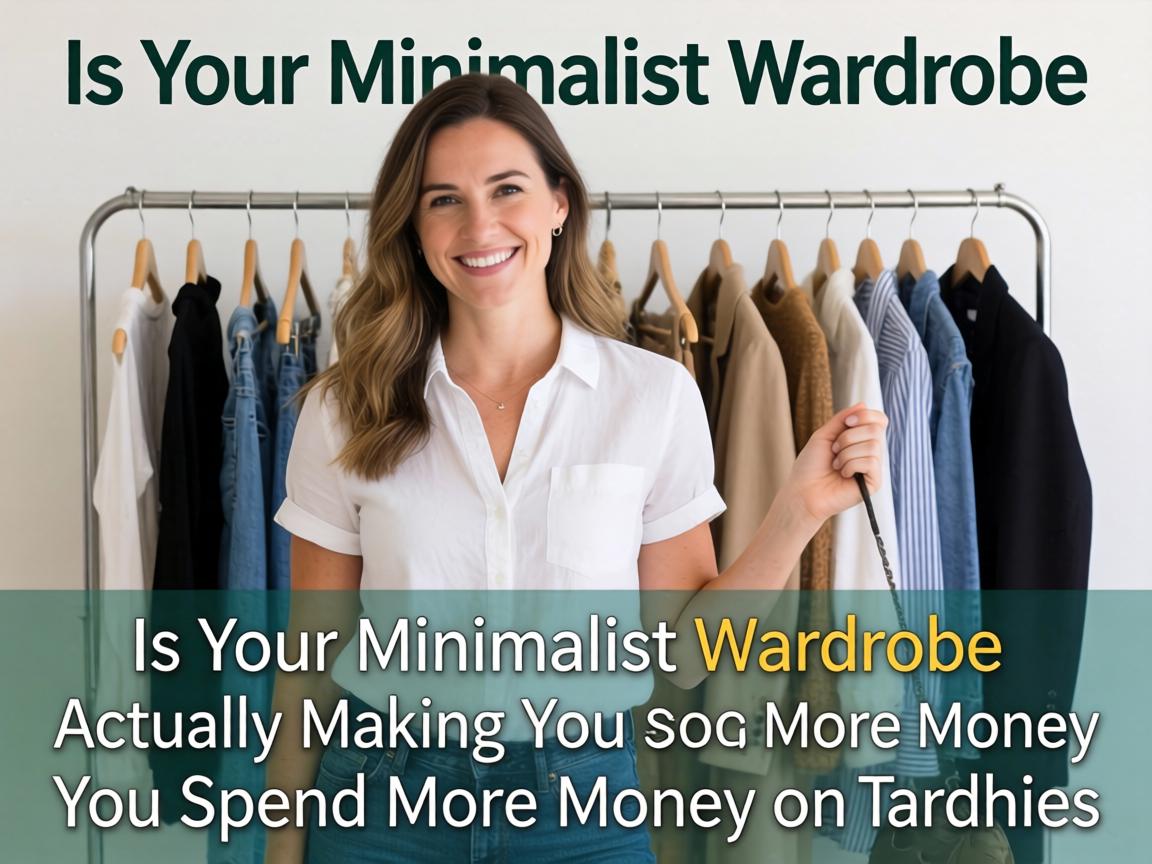
Guys, let’s be real—when did having less become so expensive? I used to think capsule wardrobes
and minimalist fashion
were the ultimate money-saving hacks. Fewer pieces, better quality, endless combinations. Sounds perfect, right? But here’s what I think most people miss: the pressure to make every single item “perfect” can actually blow your budget faster than impulse-buying trendy tops.If you’ve been scrolling through those Pinterest-perfect closets with their neutrals and investment basics
, you might be wondering why your own minimalist journey feels so… costly. A lot of people ask me whether this whole “buy less, buy better” thing actually works for real humans with real budgets. What does this mean for the season? Well, keep reading, because I’ve been tracking my spending for six months and the numbers are kind of wild.So I started this experiment back in October. Purged everything, committed to the 30-piece wardrobe
, the whole deal. My first shopping list was supposed to be “timeless essentials.” You know what happened? I spent $340 on a white button-down
because it had to be THE white button-down. The one. Then another $280 on “perfect” tailored trousers
. Three months later? I was bored out of my mind and secretly ordering a $25 zebra print skirt at midnight. Let’s be real—that’s not minimalism. That’s just expensive restriction.From my view, the problem is that minimalist content makes you believe every piece needs to be flawless. Organic cotton, ethical manufacturing, perfect fit, goes with everything
. That’s a lot of pressure for one pair of jeans. Most people don’t notice that the influencers promoting this lifestyle often have sponsorships or clothing allowances. Their “minimal” closet cost ten grand to build. Mine definitely didn’t.You might be wondering if there’s a middle ground. I think there is, actually. Here’s what I learned: the cost-per-wear math only works if you actually wear things
. Sounds obvious, but hear me out. That expensive white shirt? I’ve worn it maybe eight times because I’m terrified of ruining it. Meanwhile, my $40 Uniqlo version gets grabbed constantly because who cares if I spill coffee? The anxiety of “investment pieces” can paralyze your actual usage.
| Approach | Upfront Cost | Mental Load | Actual Wear Rate |
|---|---|---|---|
| Purist Minimalism | $$$$ (ouch) | High (decision fatigue) | Variable |
| “Good Enough” Basics | $$ | Low | Usually higher |
| Trendy Chaos | $ | Medium | Hit or miss |
See, I think the sweet spot lives somewhere between those first two columns. What does this mean for the season? Maybe we stop treating basics like sacred objects and start treating them like… clothes. Tools for getting dressed. A lot of people ask how to balance quality with sanity, and honestly? I now buy two tiers of basics
. Tier one: the actually good stuff for high-impact moments. Tier two: the “decent enough” versions for everyday living.Let’s talk about the hidden costs nobody mentions. Dry cleaning. Special detergents. The steamer you bought because wrinkles are “not minimalist.”
The storage solutions to keep your small collection pristine. The therapy bills from staring at the same beige outfit for the fifteenth day in a row. Okay, that last one’s a joke. Mostly. But you get it—minimalism has overhead that fast fashion chaos doesn’t.From my view, the real money drain is replacement anxiety. When you only own five sweaters, losing one to a moth hole feels catastrophic. You replace it immediately, often with something overpriced because you’re desperate. With a slightly larger, more casual collection? That gap doesn’t hurt as much. You have options. Options are undervalued in minimalist culture
, I think.You might be wondering about the environmental angle, because that’s usually the counter-argument. And yeah, buying less is better for the planet. No debate there. But here’s what I think: buying one $400 blazer you wear twice isn’t more sustainable than buying four $100 blazers you wear constantly
. The math on sustainability is about usage, not just quantity. Most people don’t notice that “conscious consumption” has become another marketing angle to sell expensive stuff.So is your minimalist wardrobe making you spend more? It might be, if you’re buying into the aesthetic without the lifestyle. If you’re purchasing “perfect” pieces to photograph rather than live in
. If you’re stressed about your small collection instead of liberated by it. The goal should be wearing what you own, not owning what you can’t wear.My current approach? I call it “messy minimalism.”
Fewer rules, more reality. I have my core neutrals, sure. But I also have that zebra skirt. And a vintage band tee that doesn’t “go” with anything but makes me happy. The cost per wear on joy is pretty excellent, actually.What does this mean for your closet? Maybe nothing. Maybe permission to relax a little. From my view, the best dressed people aren’t counting pieces or calculating cost-per-wear to the decimal. They’re wearing things that work for their actual lives, not their aspirational ones. And sometimes that costs $40. Sometimes it costs $400. The price isn’t the point—the wearing is.