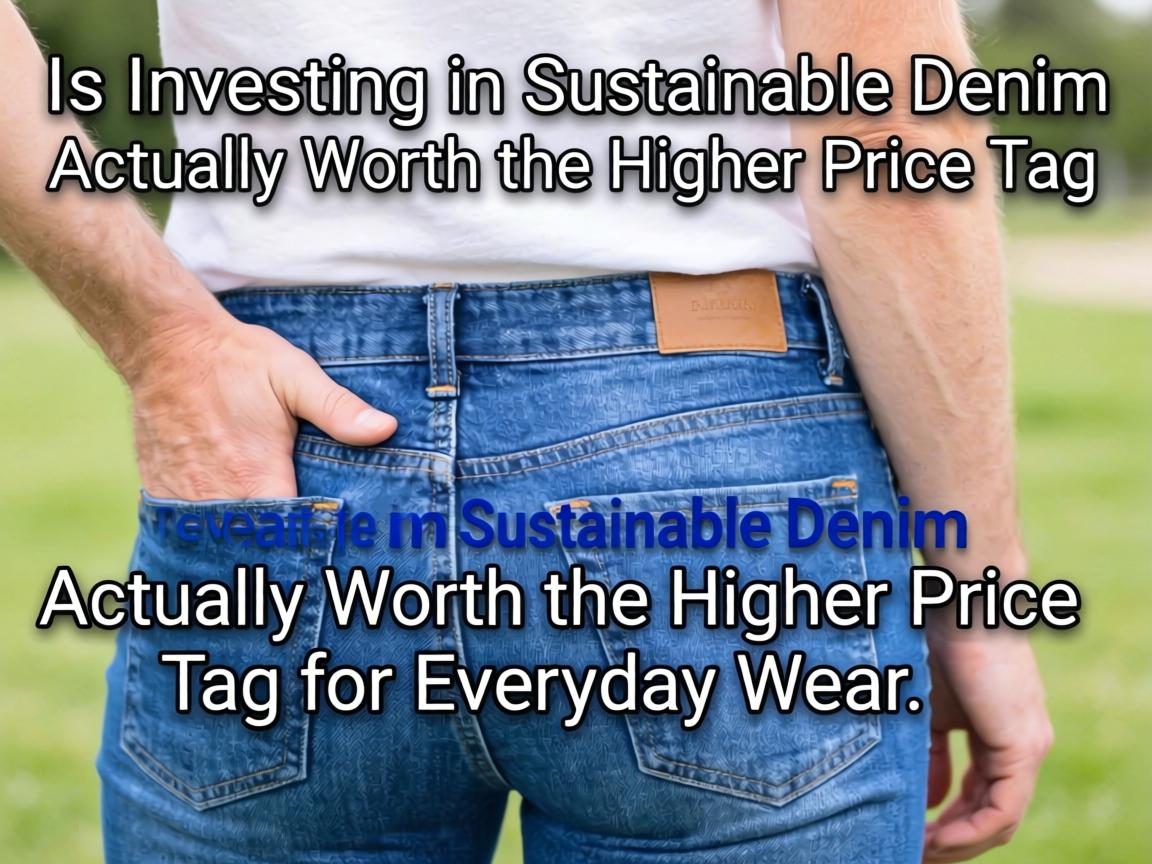
So, guys, let’s be real about something that’s been bothering me. Every time I scroll through my feed, I see another eco-friendly jeans
brand promising to “change the industry.” But here’s the thing—most of these pairs cost double what I’d pay at a regular retailer. Are they actually better? Do they last longer? Or are we just paying for the guilt-trip marketing?I decided to test this properly. Over the past eight months, I’ve rotated between three pairs: one from a sustainable denim brand
using organic cotton and waterless techniques, one “conscious” line from a major fast-fashion retailer, and my old reliable mid-range pair. The results surprised me, honestly.What “Sustainable” Actually Means (Because It’s Confusing)
You might be wondering why there’s so much greenwashing in ethical fashion
right now. Here’s what I think: the term “sustainable” has basically lost all meaning. I’ve seen it slapped on jeans that are just… regular jeans with a recycled paper tag. So let’s break down what actually matters:• Organic cotton
uses roughly 91% less water
than conventional growing. That’s not marketing—that’s data from actual lifecycle assessments
• Waterless dyeing techniques
(like foam dyeing or natural indigo vats) can cut water use by up to 90%
in the finishing process
• Recycled denim content
sounds great, but most “recycled” jeans only contain 15-30% post-consumer material
. The rest is virgin cottonA lot of people ask me whether GOTS certification
or OEKO-TEX
labels actually matter. From my view? GOTS is stricter—it covers the whole supply chain. OEKO-TEX mainly tests for harmful chemicals in the final product. Both are better than nothing, but if you’re serious about slow fashion
, GOTS is the one to watch for.The Wear Test: My Honest Comparison
Keep reading because this is where it gets interesting. I wore each pair roughly twice weekly, same care routine (cold wash, air dry, minimal detergent).
| Pair | Price | Fabric Feel | Fade Pattern | Fit Retention | Pilling/Issues |
|---|---|---|---|---|---|
| Premium Sustainable
($180) |
Stiff initially, softened beautifully | High-contrast whiskering, looks intentional | Held shape after 6 months | None yet | |
| Fast-Fashion “Conscious”
($65) |
Soft immediately, got saggy fast | Uneven, cheap-looking | Stretched out at knees within weeks | Minor pilling at inner thighs | |
| Standard Mid-Range
($90) |
Average, predictable | Classic fade, nothing special | Okay, needed belt after 3 months | Some fraying at hems |
Most people don’t notice this, but the premium sustainable pair
actually developed character. Like, the kind of aging that denim heads obsess over. The fast-fashion option just looked tired. Not vintage-tired. Sad-tired.The Cost-Per-Wear Math
Here’s what I think about the price argument. Let’s say you wear jeans 100 times per year (conservative for most of us). Over three years:• $180 sustainable pair
= $0.60 per wear
if they last
• $65 fast-fashion pair
replacing yearly = $0.65 per wear
(and that’s optimistic—mine didn’t make it a full year looking decent)
• $90 mid-range
replacing every 18 months = $0.60 per wear
The math basically evens out. But the sustainable pair feels better, looks better, and I don’t feel weird about where it came from. That last part matters more than I expected, honestly.What Does This Mean for the Season?
You might be wondering whether raw sustainable denim
or pre-washed eco jeans
make more sense right now. From my view, spring 2024 is all about rigid denim
coming back. The stiff, structured silhouettes work better with the oversized blazers
and minimalist basics
everyone’s wearing. Pre-washed is easier immediately, but rigid breaks in personally. It becomes yours.I’ve noticed something else too. Sustainable brands are finally getting better at size inclusivity
and adaptive fits
. That’s not just ethical—it’s smart business. The old stereotype of eco-fashion being only for size 0-2 sample sizes is fading. Finally.The Care Factor Nobody Talks About
A lot of people ask how to make organic cotton denim
last. Here’s my routine: wear at least 5-6 times before first wash (sounds gross, but the indigo sets better), always cold water, hang dry exclusively, and spot-clean small stains with vinegar solution instead of washing the whole pair. My sustainable pair has been washed maybe 12 times in eight months. They look basically new.My Actual Opinion
So is sustainable denim worth it? Yes, but with a caveat. You have to actually wear them. Like, regularly. If you’re someone who buys jeans and forgets them in your closet, the cost-per-wear never works out. But if you live in denim like I do? The investment pieces
from transparent brands win every time.From my view, we’re at this weird tipping point where circular fashion
and secondhand denim
are becoming cooler than buying new. I’ve started checking vintage shops
and resale platforms
before buying fresh. Sometimes you find perfectly broken-in sustainable jeans someone else gave up on. That’s the ultimate win, honestly.The industry still has massive problems. Water pollution
from denim production is real. Labor practices
in conventional cotton farming are still sketchy in many regions. One pair of jeans won’t fix that. But where we put our money does shift things slowly. I’ve seen it—brands that were terrible five years ago are at least trying now because consumers asked questions.What does this mean for the season? I think we’re moving toward transparency
as the new luxury. Not just “we use organic cotton” but “here’s exactly where this fiber came from, here’s who sewed it, here’s how much water we used.” That level of detail is becoming the standard for brands that actually care. And honestly? It’s about time.