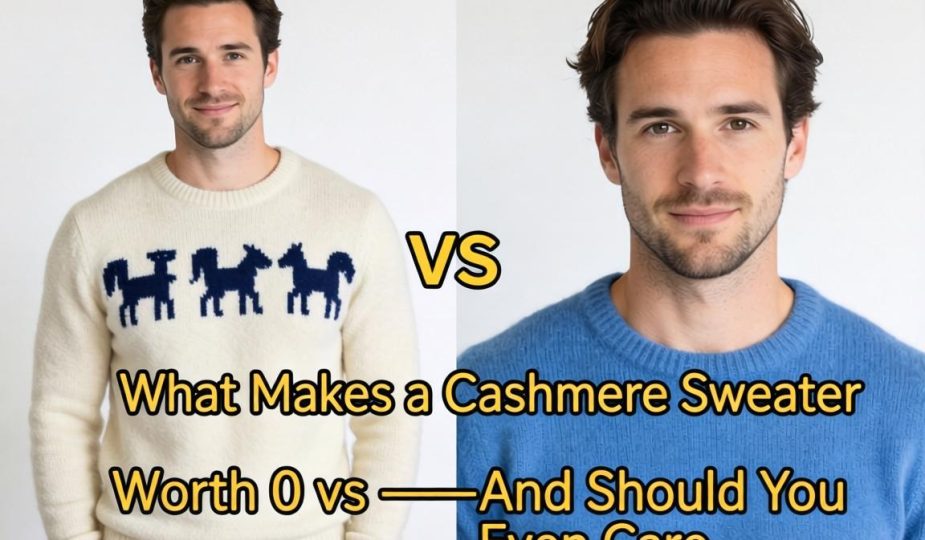
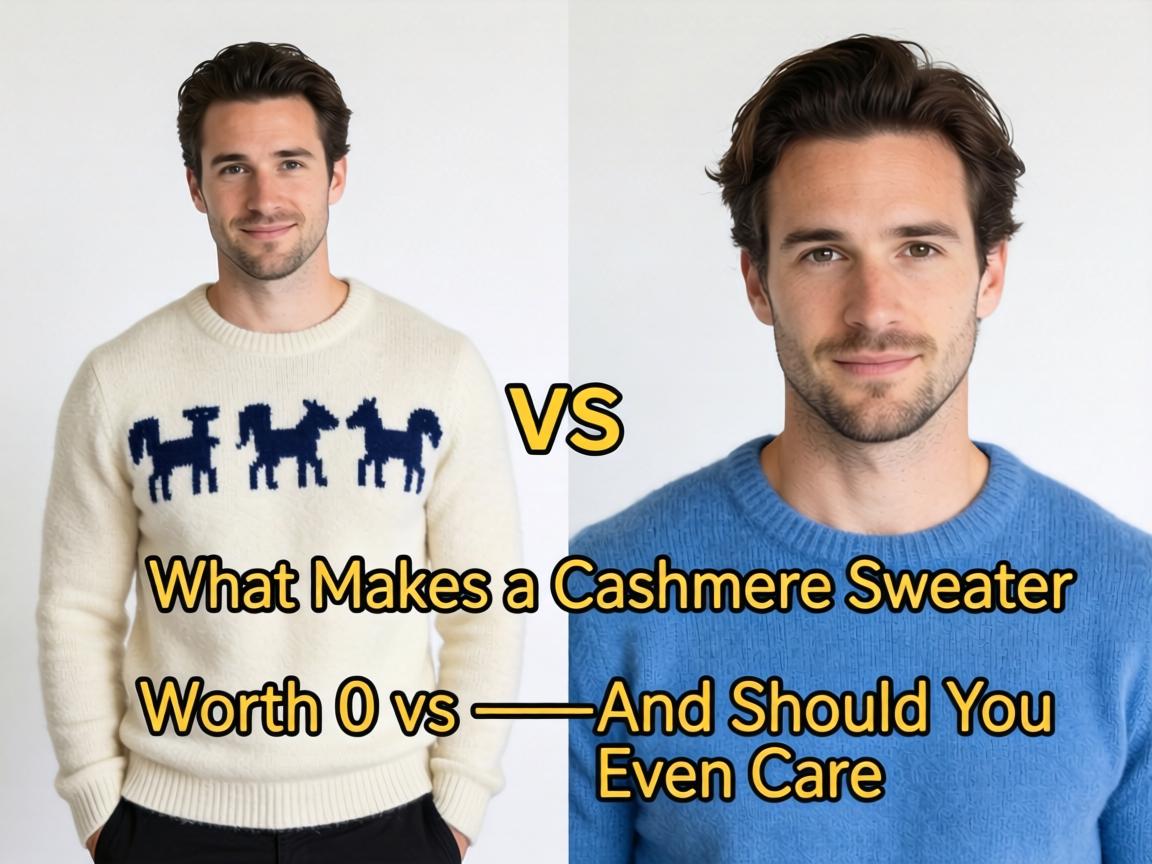
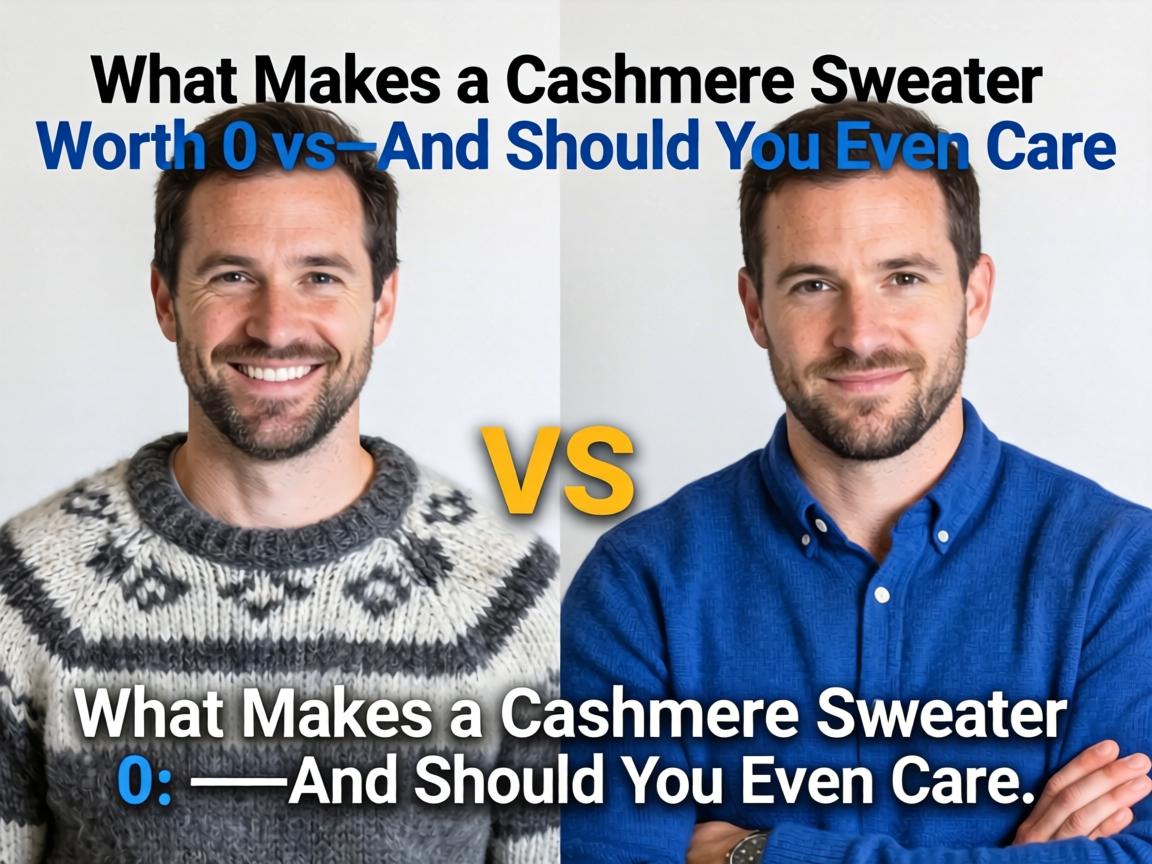
Let’s be real, guys. When you’re scrolling through fall collections and see cashmere sweaters ranging from $49.99 at fast-fashion retailers
to $500+ at luxury houses
, your brain does that little glitch. Like, what’s actually happening here? Is it all just branding? Or is there something tangible hiding in those price tags that most people don’t notice when they’re hunting for the perfect cozy piece?I’ve been digging into this because, honestly, I’ve bought both ends of the spectrum. And my closet tells a story—some sweaters pilled after two washes, others feel like wearing a cloud three years later. So here’s what I think about the real differences, and more importantly, what actually matters for your wardrobe
and your wallet.First, the fiber itself—this is where the math gets interesting.
Cashmere comes from the undercoat of Cashmere goats, mainly found in Mongolia and China. Each goat produces only about 150-200 grams
of usable fiber annually. That’s it. To make one single sweater, you need fiber from roughly 2-4 goats
. So when you see that $50 price tag, something’s already not adding up, right?The industry grades cashmere by fiber diameter and length. Grade A cashmere
measures 14-15 microns
in diameter with longer fibers—this is the stuff that feels buttery, resists pilling, and lasts for years. Grade B and C
run 16-19 microns
and shorter, which means cheaper production but also faster deterioration. A lot of people ask me: “Can you actually feel the difference?” From my view? Absolutely. Grade A has this weightless, almost liquid drape. Grade C feels… fuzzy. Not bad, but not that luxury sensation you’re chasing.You might be wondering how brands get away with $50 cashmere. Here’s the reality check: most budget “cashmere” blends contain 10-30% actual cashmere
mixed with wool, acrylic, or yak hair. It’s legally labeled if they disclose it, but who reads the fine print when the tag screams “CASHMERE”? That $50 sweater? You’re probably getting $12 worth of actual fiber
and a lot of marketing.Construction and sourcing—this is where ethical fashion enters the chat.
High-end cashmere brands like Loro Piana, Naadam, or Everlane’s premium lines
often trace their supply chains directly to Mongolian herders. They pay fair wages, use traditional combing methods instead of shearing (which harms the goats), and invest in sustainable grazing practices
. The cheaper stuff? Mass-produced, often from overgrazed regions where herders get squeezed on price. What does this mean for the season? It means that $500 sweater might actually be supporting a system that keeps cashmere available long-term, while the $50 version contributes to desertification and animal welfare issues most consumers never consider.But let’s talk construction details, because this is where I get nerdy. Luxury cashmere uses 2-ply or 4-ply yarn
—multiple strands twisted together for strength and structure. Budget versions often use single-ply
, which feels lighter but pills instantly and loses shape. Check the gauge too: 12-gauge knitting
(finer, tighter) costs more to produce than 7-gauge
(looser, chunkier). That tight gauge? It’s why expensive cashmere looks sleek under blazers while cheap versions bulk up awkwardly.Durability math—let’s run some numbers because this matters.
Say you buy that $50 sweater
and wear it 10 times before it pills, stretches, or gets relegated to “home loungewear only.” That’s $5 per wear
. Now take a $400 Grade A cashmere piece
you wear 80 times over three years with proper care. That’s $5 per wear too
—but you looked better, felt better, and didn’t contribute to landfill waste. From a cost-per-wear perspective, the math often favors investment pieces, especially for wardrobe staples you’ll reach for constantly.Keep reading, because here’s where I get controversial: not everyone needs luxury cashmere.
If you’re building a capsule wardrobe and wear neutrals daily? Invest in one perfect navy or camel Grade A piece
and baby it. If you love trend colors and treat sweaters as seasonal experiments? That $50 blend might be smarter. I have a $60 pink cashmere-blend I wear exactly twice a year for specific Instagram photos. No regrets. But my charcoal 2-ply investment sweater
? That’s been my winter uniform for four years and counting.Care and maintenance—this is where most people sabotage their knitwear regardless of price.
Even $500 cashmere dies in a hot washing machine. Here’s what I’ve learned the hard way:
- Hand wash cold
with specialized detergent (I like The Laundress or Woolite)
- Never wring
—press water out with towels
- Dry flat
on a mesh rack, never hang (gravity kills the shape)
- Store folded
with cedar blocks, not mothballs (which smell forever)
- Depill gently
with a fabric comb, not those aggressive electric shavers
That $50 sweater? You might not bother with all this. And honestly, that’s fine. But treat the expensive stuff right and it develops this gorgeous patina, like vintage denim or leather.So what’s the verdict?
From my view, the cashmere market splits into three camps worth considering:
| Factor | Budget ($30-80) | Mid-Range ($150-300) | Investment ($400+) |
|---|---|---|---|
| Fiber Grade
|
Mixed/Blended | Grade B-C | Grade A |
| Ply Count
|
Usually single | 2-ply common | 2-4 ply |
| Durability
|
1-2 seasons | 3-5 years | 5-10+ years |
| Ethical Sourcing
|
Rare | Sometimes | Often traceable |
| Best For
|
Trends, testing | Building wardrobe | Lifetime pieces |
You might be wondering if there’s a sweet spot. I’d argue $180-250
hits it for most people—brands like Quince, Naadam, or J.Crew’s Italian cashmere
offer genuine Grade A at accessible prices by cutting retail markup, not fiber quality. They’re my go-to recommendations when friends ask.One last thing most people don’t notice: color saturation
. Cheap cashmere dyes unevenly and fades fast. That rich burgundy or forest green you loved in October? By February it’s washed-out and sad. Premium cashmere holds dye beautifully because the fiber structure accepts pigment more uniformly. Small detail, huge impact on how expensive your outfit looks.At the end of the day, cashmere isn’t just about warmth—it’s about how you feel wearing it
. That sounds cheesy, but let’s be real. When you pull on a perfectly fitted, impossibly soft sweater that drapes like it was made for you, there’s a confidence boost that $50 fast-fashion rarely delivers. Whether that feeling is worth $400 depends entirely on your budget, your values, and how many times you’ll actually wear it.I’m curious—what’s your cashmere philosophy? Splurge on one perfect piece, or collect colors at every price point? Drop your thoughts below, and let’s debate the best brands for each budget tier. From my view, the conversation is always more interesting than the label.