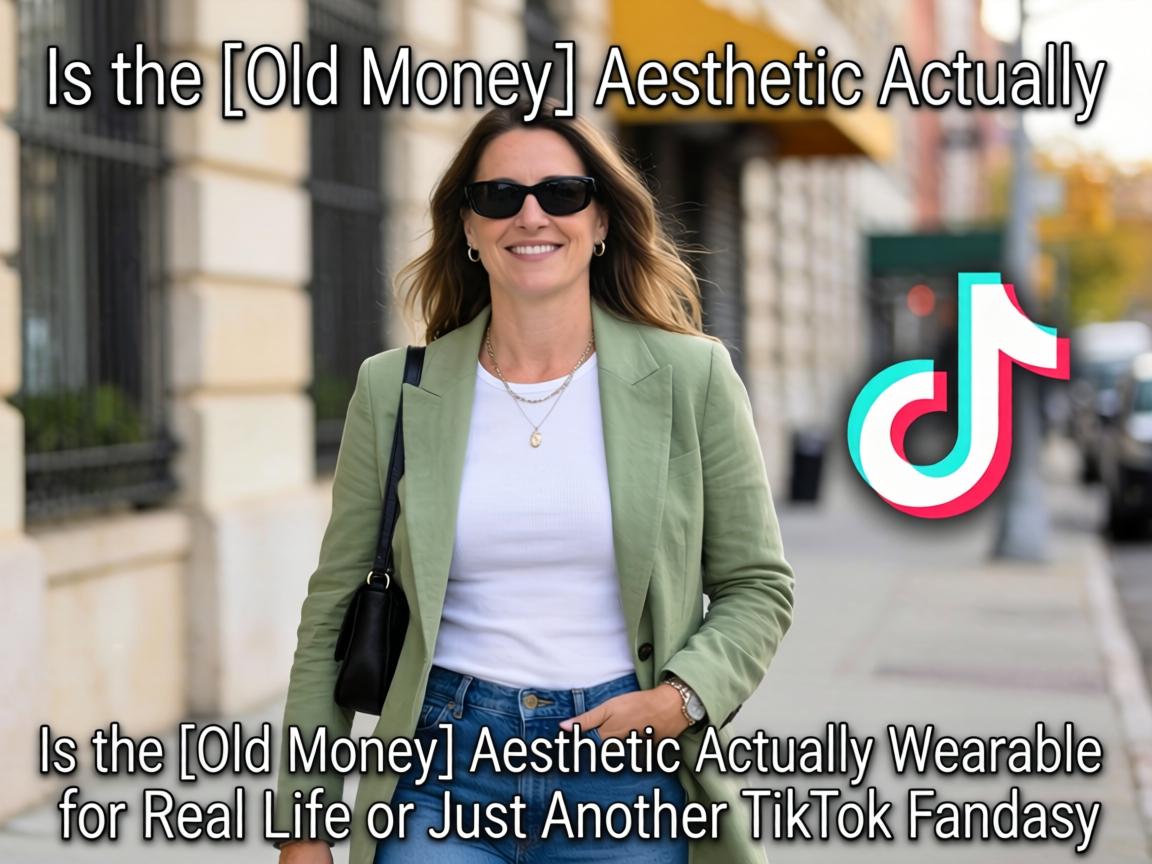

Guys, let’s be real — how many hours have you lost scrolling through those “old money” TikToks? You know the ones. Women in cashmere sweaters
draped over shoulders, sailing on boats that cost more than houses, looking like they just stepped out of a Ralph Lauren catalog from 1987. It’s hypnotic. But here’s what keeps me up at night — can anyone actually dress like this without inheriting a trust fund, or is it all just performance for social media clicks?The quiet luxury
movement has absolutely dominated fashion conversations this year. Searches for “stealth wealth”
and “old money style”
have exploded by over 300%
since last spring. Everyone wants that understated elegance
, that “I don’t try too hard because I don’t have to” energy. But you might be wondering — what does this actually look like when you’re commuting on a packed subway or grabbing coffee before a 9-to-5 that doesn’t involve a corner office?From my view, the aesthetic gets misunderstood constantly. It’s not about logos. It’s never been about logos, actually. That’s the whole point. Loro Piana
, The Row
, Brunello Cucinelli
— these brands whisper instead of scream. Their pieces cost a fortune because of fabric quality and construction, not because they plaster monograms everywhere. But here’s where I get frustrated with the trend: we’ve created this weird middle ground where fast fashion tries to mimic the vibe without the substance, and suddenly everyone’s wearing beige thinking they’re channeling Carolyn Bessette-Kennedy.A lot of people ask me if they need the actual expensive pieces to pull this off. Honestly? No. But you need to understand why the expensive pieces work. The natural fibers
— wool, silk, cashmere, linen — they behave differently on your body. They drape better, breathe better, age better. That $25 “cashmere blend” from a fast-fashion giant? It’s mostly plastic, and it pills after two washes. I’ve learned this the hard way so you don’t have to.What does this mean for the season? Spring 2026 is seeing this fascinating tension between the old money minimalism
and the chaos of microtrends
fighting for attention. While everyone’s chasing the next viral aesthetic — mob wife
, coastal grandmother
, tomato girl
(I can’t even keep up anymore) — the “old money” devotees are just… wearing their same quality basics. It’s almost rebellious in its consistency.Keep reading, because this is where I think the conversation gets interesting. The real secret isn’t the clothes themselves — it’s the fit and maintenance
. Most people don’t notice, but wealthy people get everything tailored. That “effortless” silhouette? It’s usually altered to within an inch of its life. A $50 thrifted blazer that fits perfectly will always look more expensive than a $800 designer jacket that’s swimming on you.You might be wondering about the actual color palette. It’s true — neutrals
dominate. Navy, camel, cream, charcoal, ivory. But here’s what I think gets overlooked: texture becomes your personality when color stays quiet. A chunky cable knit
hits different than a smooth merino. Tweed
carries more visual interest than plain wool. Pinstripes
add authority without aggression. You build interest through material, not through screaming prints.Let me break down how I’d approach building this wardrobe without the inherited wealth, because I think that’s what most of us actually need:• The Foundation
: One perfect white button-down
(cotton or silk), one navy blazer
, one pair of tailored trousers
in wool or crepe
• The Knitwear
: A cashmere crewneck
in camel or gray — save for this, wear it forever
• The Shoes
: Loafers
or ballet flats
in leather, not synthetic. They mold to your foot and get better with age
• The Bag
: Structured, minimal hardware, preferably vintage or from a heritage brand’s entry lineThat’s it. That’s the core. Everything else rotates around these pieces.From my view, the accessory game matters more than people admit. A silk scarf
tied properly. Pearl studs
or simple gold hoops. A classic watch
— doesn’t need to be Rolex, just needs to look intentional. These small details signal “I have my life together” even when you’re running late and spilled coffee on yourself.What does this mean for the season specifically? We’re seeing heritage brands
lean hard into this narrative. Burberry
is reviving archive trench coat designs. Hermès
(obviously the ultimate old money signifier) keeps raising prices to maintain exclusivity. But simultaneously, vintage shopping
and consignment
have democratized access. I found a Max Mara
camel coat from the 90s for $180 last month. Original retail? Probably $2000+. The quality is insane — heavier wool, better lining, actual craftsmanship.A lot of people ask about the attitude component. This is tricky. The “old money” aesthetic carries this implication of… unbothered-ness. Like nothing rattles you. That’s hard to fake if you’re stressed about rent. But here’s what I think — confidence in your clothes does translate to how you carry yourself. When you’re not tugging at hems or worrying about transparency or adjusting straps every five minutes, you naturally look more composed. Quality buys you that mental space.Most people don’t notice the grooming details, but they matter immensely. Clean, pressed clothes. Shoes maintained, not scuffed. Nails neat, hair intentional but not overdone. It’s the invisible effort
that creates the visible ease. I struggle with this myself — I’m not naturally organized — but I’ve started setting aside Sunday evenings for garment care, and it genuinely changes how I feel getting dressed on Monday.You might be wondering if this aesthetic is too boring. Fair concern. It can be. That’s why I think the modern interpretation needs one element of personality — maybe it’s vintage jewelry
from your grandmother, maybe it’s bold eyewear
, maybe it’s an unexpected pop of color
in a sock or lining. Something that says “I chose this” rather than “I copied a Pinterest board.”The sustainability
angle here is actually strong, which surprised me. Buying less, buying better, wearing longer — that’s the core of both old money style and environmental responsibility. The fashion industry produces 10% of global carbon emissions
, and most of that comes from our collective addiction to quantity over quality. Dressing like you have “old money” essentially means opting out of the trend cycle. It’s slow fashion disguised as class signaling.From my view, the biggest misconception is that this look requires a certain body type or lifestyle. It doesn’t. It requires editing. Curating. Saying no to 90% of what retailers try to sell you. The most “old money” thing you can do is wear the same perfectly fitting navy dress
to three different weddings with different accessories, while everyone else panic-buys new fast-fashion outfits they’ll never wear again.Here’s what I think about the future of this trend — it will evolve, but the principles stick. We’ll see more inclusive sizing
in quality basics (finally). More transparent pricing
from brands trying to justify costs. More rental and resale
options for accessing true luxury without ownership. The aesthetic itself might fade from TikTok’s algorithm, but the desire for longevity won’t.So is it wearable for real life? Yes, but with modifications. You adapt the spirit — quality, fit, restraint — to your actual circumstances. You don’t need the yacht. You need the sweater that makes you feel like you could own a yacht, even if you’re just grabbing groceries. That confidence shift? That’s the real luxury.