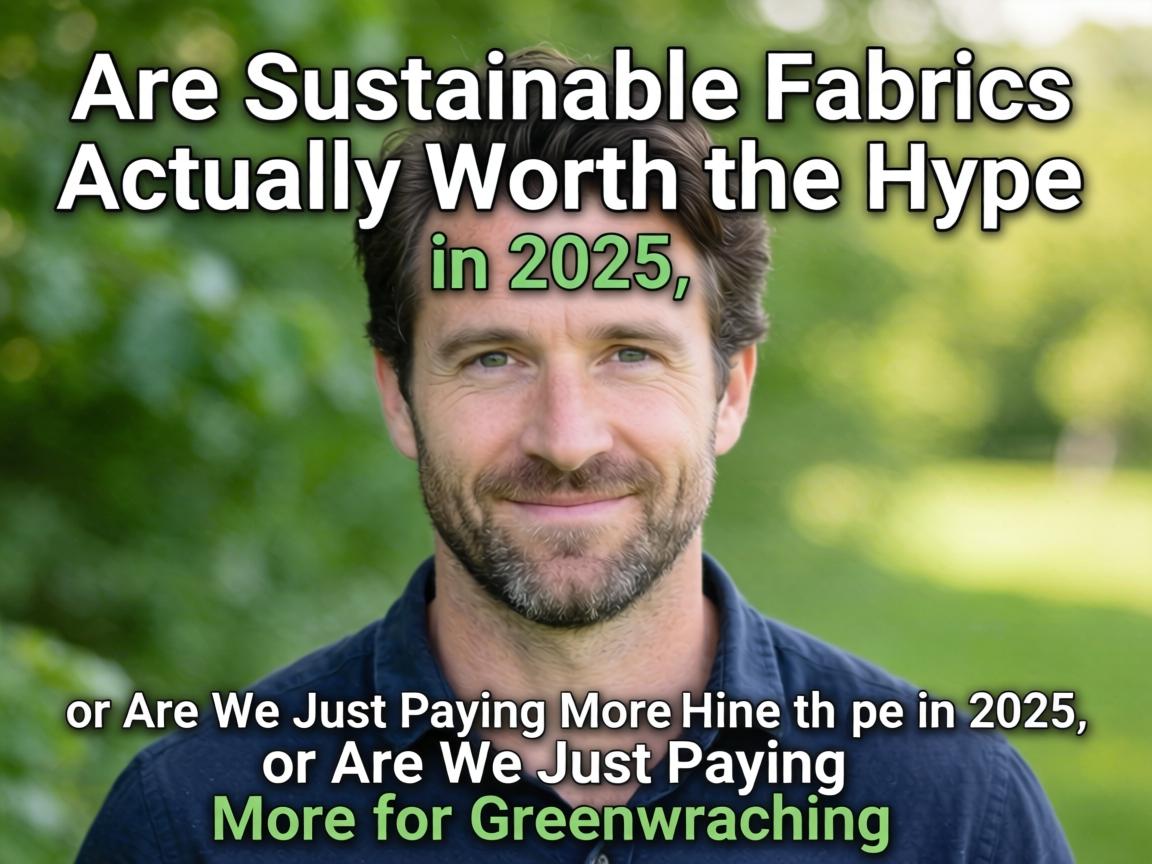
So I’ve been staring at my closet lately wondering—are all these “sustainable” labels actually doing anything for the planet, or am I just spending extra money to feel less guilty about my shopping habit? Let’s be real, sustainable fashion 2025
is everywhere right now. Every brand claims they’re eco-friendly, every tag has some certification I’ve never heard of, and my Instagram feed is basically one long lecture about organic cotton. But what’s actually legit?Here’s what I think. The intention behind sustainable fabrics is obviously good. We needed to stop treating clothes like disposable napkins. But the execution? Messy. Really messy. You might be wondering how to tell the difference between actual sustainability and clever marketing. Honestly, same. I’ve spent way too many nights down research rabbit holes trying to figure out if Tencel vs organic cotton
is better, or if recycled polyester
is just greenwashing with extra steps.Let me break down what I’ve learned because a lot of people ask about this. There are basically three tiers happening right now. First, you’ve got your certified organic materials
—GOTS certified cotton, linen from responsible sources, peace silk. These cost more but they’re traceable. Then there’s the middle ground: deadstock fabrics
, upcycling, vintage. Less sexy for marketing but honestly more impactful in my view. Third tier is the sketchy stuff. “Eco-friendly” viscose that still pollutes rivers. “Sustainable” collections that are 5% recycled material and 95% regular polyester. That last one? That’s the greenwashing we’re all worried about.What does this mean for the season though? I’ve noticed something interesting while shopping for spring 2025 wardrobe updates
. The brands that are actually serious about sustainability aren’t talking about it as much anymore. They just… do it. It’s becoming table stakes, not a selling point. Meanwhile, the fast fashion giants are screaming “CONSCIOUS COLLECTION” from the rooftops. That tells you everything, guys.Keep reading, because I want to compare two approaches I’ve tried personally:
| The Marketing Version | The Real Deal |
|---|---|
| “Made with recycled materials” (unspecified percentage) | Specific percentages, supply chain transparency |
| One “sustainable” capsule collection per year | Entire brand philosophy built on ethics |
| Expensive because of the label | Expensive because of fair wages and quality materials |
| Trendy eco-buzzwords | Boring technical details about water usage |
| Makes you feel instantly virtuous | Makes you confront uncomfortable truths about consumption |
From my view, the most sustainable thing you can do isn’t buying new “sustainable” clothes at all. It’s wearing what you already own longer. Revolutionary concept, I know. But when you do need to buy something new—and we all do eventually—investment pieces
in actually good fabrics make more sense than cycling through three “conscious” tops from a trendy brand.You might be wondering about specific fabrics though. Okay, so hemp
is having a moment, which is great because it grows fast without pesticides. Linen
is everywhere for summer 2025, and it’s genuinely low-impact if it’s not heavily processed. Tencel/lyocell
? Pretty good, actually. Closed-loop production, biodegradable, feels amazing on skin. But here’s the thing most people don’t notice: the dye process matters as much as the fiber
. You can have organic cotton that’s been dyed with toxic chemicals in factories with no wastewater treatment. The label won’t tell you that.A lot of people ask me about recycled polyester
specifically. Is it good? Is it bad? It’s… complicated. It keeps plastic bottles out of landfills, sure. But washing it still releases microplastics into the water. And it doesn’t biodegrade. So you’re solving one problem while creating another. I still buy it for things that need to be durable and washable—outerwear, activewear—but I don’t pretend it’s perfect. Let’s be real, nothing is.What does this mean for how we shop in 2025? I think we’re moving toward radical transparency
whether brands like it or not. Consumers are getting smarter. We want to know exactly where something was made, by whom, for what wage. The brands surviving this shift are the ones leaning into that complexity instead of hiding behind vague promises.Here’s what I think about the cost issue though. Yes, truly sustainable fashion costs more. But cost per wear
is the metric we should care about. A $200 organic cotton dress you wear 50 times is cheaper than a $40 polyester one you wear twice and toss. The math works, but it requires thinking longer term than we’re used to.You might be wondering if individual choices even matter when the fashion industry is this huge. That’s the depressing question, isn’t it? From my view, they matter less than systemic change, but they matter more than doing nothing. Plus, our collective behavior shapes what companies do. If we all stopped buying the greenwashed stuff, they’d stop making it. Basic economics.I’ve been experimenting with fabric care
too, which nobody talks about but everyone should. Washing clothes less, in cold water, air drying when possible—this extends the life of sustainable fabrics significantly. Even the most ethical hemp shirt won’t last if you boil it in the washing machine every three days. Most people don’t notice this connection, but garment longevity is part of sustainability too.A lot of people ask about vintage and secondhand
as the solution. And honestly? It’s the best option for most of us. No new resources used, unique pieces, often better quality than new stuff. The resale market growth
in 2025 has been insane for a reason. It’s not just about being eco-friendly—it’s about finding something nobody else has. The sustainability is almost a side benefit at this point.So are sustainable fabrics worth the hype? Some are. Some definitely aren’t. The trick is getting comfortable with nuance, with “better but not perfect,” with asking uncomfortable questions about your own consumption. The brands that survive the next five years will be the ones that stop treating sustainability as a marketing angle and start treating it as basic responsibility.That’s where I land on this, anyway. It’s less about finding the perfect eco-fabric and more about changing how we think about clothes entirely. Harder, but more honest.