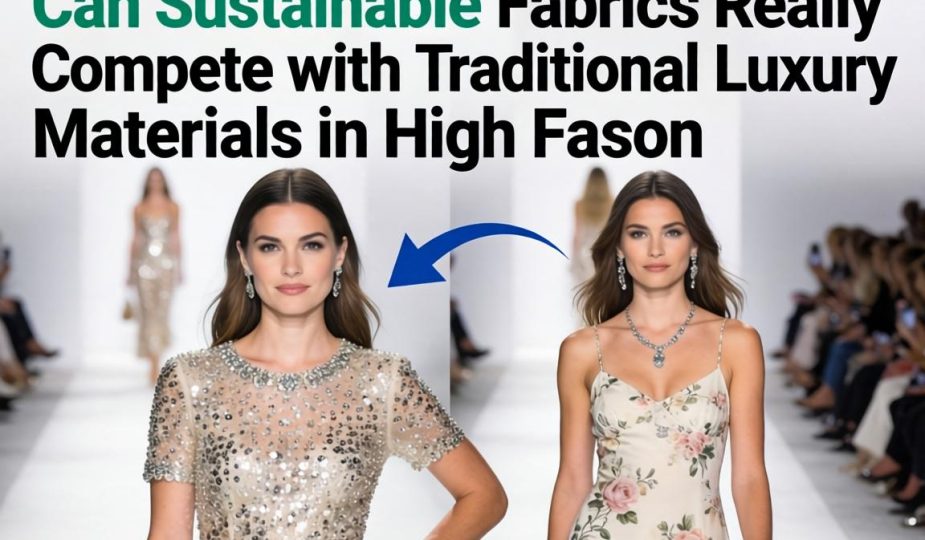
Guys, let’s be real—when you think “luxury fashion,” what pops into your head? Probably buttery Italian leather, heavy silk charmeuse, maybe some cashmere so soft it feels illegal? But here’s the thing nobody was talking about five years ago: sustainable fabrics
are crashing the party, and honestly? They’re not leaving. From my view, we’re at this weird tipping point where eco-materials aren’t just for granola brands anymore—they’re hitting the runway, the red carpet, and yeah, even your Instagram feed.You might be wondering if this is just another trend cycle, another “greenwashing” moment that’ll fade by next season. I thought that too, actually. But then I started looking at the numbers, the textile innovations, the way major houses are quietly reformulating their supply chains… and okay, something’s shifting. What does this mean for the season? It means conscious luxury
isn’t a niche—it’s becoming the baseline.A lot of people ask me about the feel factor. Like, does recycled polyester actually feel… good? Here’s what I think: the gap is closing faster than most realize. I’ve touched lab-grown leather that fooled me completely—same weight, same grain variation, same smell almost. Modern sustainable textiles
have moved past that crunchy, obvious look. We’re talking Tencel blends
that drape like liquid, organic peace silk
with this subtle luminosity, regenerative cotton
that actually gets softer with wear.Let me break this down simply:Performance Comparison
- Traditional silk: beautiful sheen, delicate, dry-clean only, high water footprint in production
- Tencel/lyocell: similar drape, machine washable, closed-loop production
using 80% less water
- Virgin polyester: durable, cheap, microplastic pollution nightmare
- Recycled ocean plastic textiles: comparable durability, removes waste from ecosystems
, slightly higher cost
But wait… cost. That’s the real conversation, right? Most people don’t notice that luxury pricing
has always been about perception as much as material. A $3000 bag isn’t expensive because the leather costs $3000. So when brands switch to mushroom leather
or pineapple fiber (Piñatex)
, the markup stays similar but the environmental math changes dramatically.From my view, the resistance isn’t really about quality anymore—it’s about storytelling. We’ve been trained to associate “natural” with “premium,” but lab-grown materials
can actually be purer, more consistent, more controllable. No scars, no irregularities, no ethical baggage about how the animal was treated. That’s valuable, even if we’re not fully comfortable admitting it yet.Keep reading if you want the uncomfortable truth…You might be wondering which houses are actually committing versus just marketing. Here’s what I think: Stella McCartney
obviously pioneered this space, but now look at Hermès
partnering with MycoWorks
for mushroom-based materials. Kering
pledged to go entirely carbon-neutral within their supply chain. These aren’t small moves. These are infrastructure changes
that take years to implement.The texture conversation gets interesting too. I’ve handled cactus leather
that had this beautiful, slightly matte finish—different from animal leather, sure, but not worse. Just… different. Like comparing linen to cotton. Both valid. Both luxury, depending on execution.What does this mean for the season? I’m seeing biodegradable sequins
, algae-based dyes
, 3D-knitted zero-waste garments
hitting contemporary price points. Not couture-exclusive. Accessible. That democratization matters because it normalizes the materials.Let’s be real, though. There’s still greenwashing everywhere. “Eco-friendly” tags without certification. “Organic” claims that don’t hold up. From my view, the smart move is learning to read labels properly—GOTS certified
, Cradle to Cradle
, Bluesign approved
. These actually mean something. The rest? Marketing fluff.A lot of people ask me if sustainable fabrics will ever fully replace traditional luxury materials. Honestly? Probably not completely. There’s emotional attachment to certain textures, heritage value in techniques that require specific fibers. But the ratio is flipping
. Where eco-materials were 5% of luxury collections, we’re heading toward 50%, maybe higher.Most people don’t notice that innovation cycles
in textiles are accelerating. What took decades to develop now happens in months with AI-assisted molecular design. Self-healing fabrics
, temperature-responsive weaves
, carbon-negative production
—these aren’t sci-fi. They’re sample swatches sitting in design studios right now.Here’s what I think about the future: the definition of “luxury” is being rewritten. It used to mean rare, expensive, slightly unattainable. Now it’s starting to mean responsible, innovative, intentional
. The status symbol shifts from “I can afford this” to “I made the conscious choice.”From my view, that’s way more interesting than another season of the same old silk and leather. The texture might feel slightly different under your fingers, but the story behind it? That’s what actually feels expensive now.